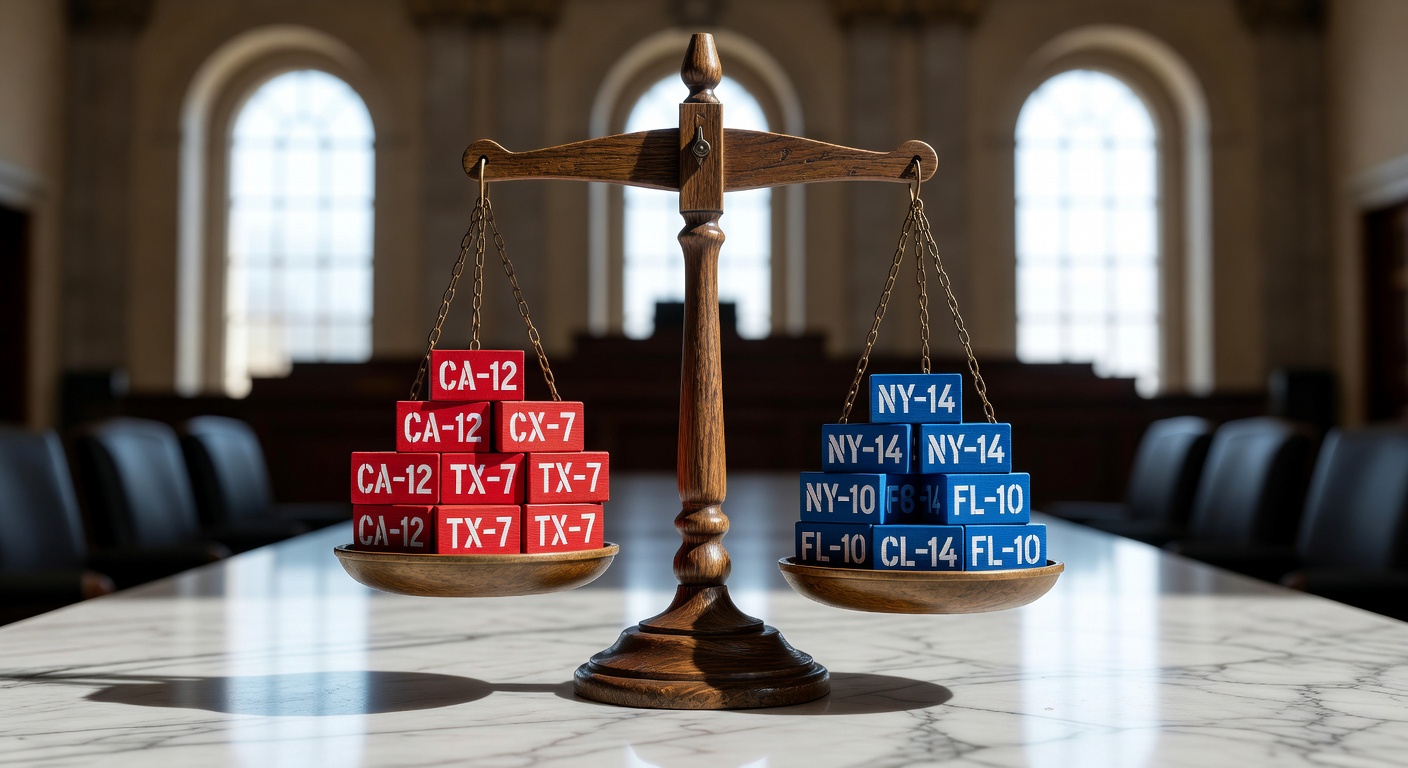
Republicans' mid-decade redistricting push has delivered a net gain of one House seat to Democrats so far, with Republicans picking up nine seats offset by ten Democratic gains across seven states. The effort, launched at President Trump's request in Texas last year, aimed to shore up the GOP's slim 217-212 House majority ahead of the 2026 midterms. Instead, Democratic countermeasures in California and Virginia have erased most gains, leaving Republicans exposed.
Texas Kickoff Falls Flat on Net
Texas Republicans drew five new GOP-leaning districts in 2025, the first move in Trump's call for mid-decade map changes to protect the House majority. Lawmakers there packed Democratic voters into fewer seats while carving safer paths for their incumbents. That sparked a wave of copycat efforts, but the math quickly soured.
Missouri added one Republican seat. North Carolina delivered one more. Ohio gave two. Those nine gains looked promising on paper. Yet Democrats fired back. California courts imposed five Democratic seats. Utah flipped one blue. Virginia voters locked in four Democratic districts on April 21. Ballotpedia tallies the enacted maps at a +10 D, +9 R balance.
| State | Partisan Shift |
|---|---|
| Texas | +5 R |
| Missouri | +1 R |
| North Carolina | +1 R |
| Ohio | +2 R |
| California | +5 D |
| Utah | +1 D |
| Virginia | +4 D |
| Total | +9 R, +10 D |
Sabato Ratings Show Democrats Ahead
After Virginia's map approval, Sabato's Crystal Ball now rates 217 districts leaning Democratic, 205 leaning Republican, and 13 as toss-ups. Democrats sit one seat shy of a majority in the lean ratings alone. That marks a step back for Republicans from pre-redistricting forecasts, where GOP advantages appeared more secure.
The House currently lists 217 Republicans, 212 Democrats, one independent, and five vacancies, per the House Press Gallery. Republicans hold their edge by a thread. Any net loss from redistricting tilts control toward Democrats without a single ballot cast in 2026.